
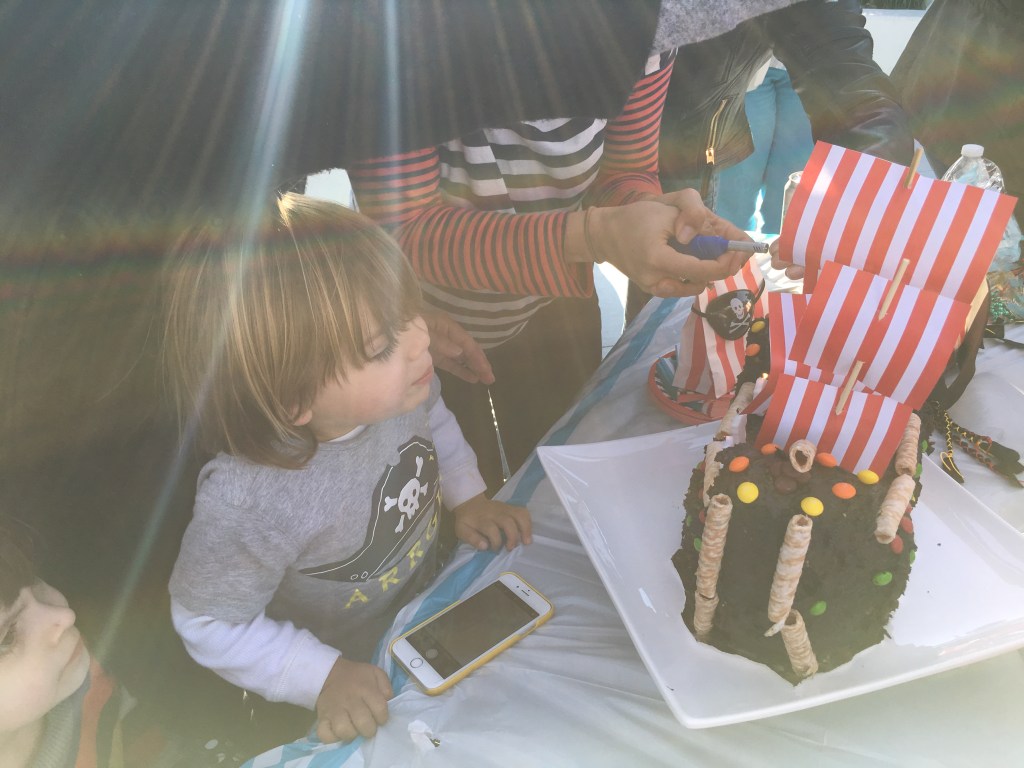
My dear boy Sebastian turned three years old, and we had a great party for him in Marina del Rah (pronounced like a Californian). My wife Tania had, fittingly, picked the park at Mother’s Beach for the pirate-themed party that Seabass had requested. (We don’t typically condone the use of the nickname Seabass but we were allowing it given the pirate and seafaring themes of the day.)
Tania really did pick the perfect place and pulled off a great pirate birthday party, replete with a homemade pirate ship piñata and birthday cake. A seal even joined us on the beach, making his way to the party through a gaggle of pelicans. Capping off the sense that the party had been divinely inspired and sanctioned, a “Honda Help” team was there when Tania showed up to reserve the picnic tables, and they not only helped to reserve the space but then set up the entire party and accoutrements. “Wait, what, fo’ real?” Yeah, seriously.
What I ended up thinking about from various perspectives throughout the day, though, was the concept of relativity. I’m not talking about Einstein’s “theory” either, I’m referring to the fact of human relativity – our tendency to compare what we have to others – and its preeminence in each of our minds basically from the start. This particular thought train began to pull away from the station after a brief conversation I had with Jade about what a nice day it was and how great Sebastian’s party had turned out. She seemed to agree, but I could tell during the exchange that she was pondering something that had clouded her perspective. Finally she turned to me and said “Daddy, this is a great birthday party, but it isn’t as great as mine was, though. Right?”
Ugh.

Of course, we all are constantly comparing what we have (and what we don’t have) with our closest neighbors. As children, that usually means your brother or sister. When children are alone, they want what they want. But when they get together with other children, they feel they need to have whatever it is the other kids have just to feel OK. And if you want them to actually feel good, it typically requires them having just a bit more.
As I thought about the force of this relativity in how we make decisions and look at our lives, a perfect representation of the phenomenon presented itself in the form of a pirate-ship piñata and the attendant ritual. While the kids lined up to get ready to take a twhack, the pitched competition had already begun with multiple kids asserting that they should be the first to swing. We settled this first facet of the contest by establishing that the line would form from smallest to biggest. The older kids seemed to accept this as they queued up behind the smaller set, but you could still see them hesitate before rationalizing that “these kids may get to go first, but at least I’m still bigger.”

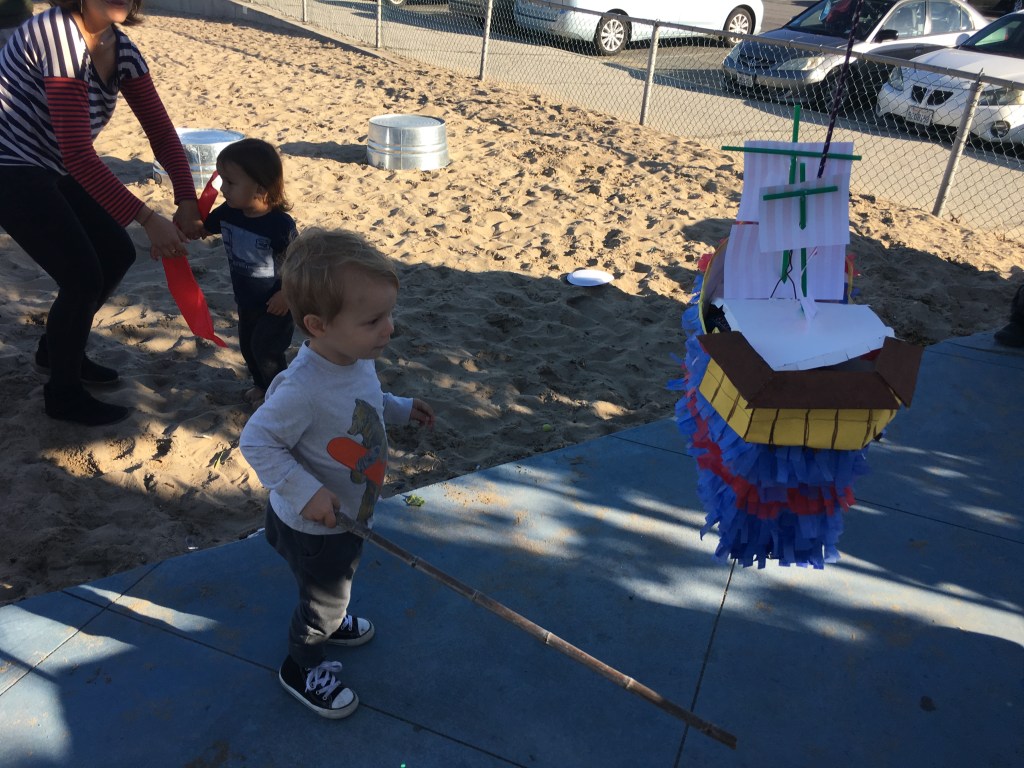
The jockeying for position in line though was nothing compared to the melee that ensued, as it always does, when the piñata broke and the mini-Halloween style bags of candy began to fall. This is where the bigger kids got their revenge and struck first, elbowing out all-comers as they pounced and got as many bags as they could before clearing the area with their loot. When the sand settled and the results of the scrum became apparent, those with the more paltry takes were left to consider their misfortune. Kids who an hour before had had no expectation that they would be at a park on the beach with a sack of mini Mike and Ike’s, Twizzlers, Starburst and Sour Patch Kids, nonetheless collapsed into the sand in despair. “But, but, but, so and so got………MORE.”
Parents with more than one child (or anyone who grew up with siblings of a similar age) are all-too familiar with this phenomenon. As a parent, it can be incredibly frustrating, because it leaves you thinking that there is nothing you can do to collectively satisfy your children. Walk into an ice-cream shop in good spirits on a sunny afternoon for a family treat, walk out with a budding headache and at least one screaming child who feels they’ve been disrespected because their sibling got more yellow sprinkles.
The fact that people compare what they have to what they’re neighbors have is obviously no great revelation, especially when considered in the context of children and candy. What’s both fascinating and slightly tragic though is that we never stop measuring ourselves in petty little ways that we would admonish our own children for. As participants in a modern society predicated on the existence of winners and losers, we’ve all been swallowed in a churning sea of relativity, where every buoy and directional marker is meticulously observed and measured as a means to stay afloat.
That said, I think that we’ve all been tricked. I don’t need three bags of Sour Patch Kids and you don’t either. How can we just go back to wanting what we want, without running it through the relatively machine to make sure that its at least as much as what others would want or have?
To begin, we need to acknowledge that our insatiable desire for MORE of everything is not a moral failing on our part. Those ancient ancestors of ours who were insatiable, and always wanted more mates, more children, more food, more social standing, and more security against predators and foes were simply the ones who got to produce the largest number of surviving offspring. But while insatiability did in the past lead to more children, it doesn’t typically lead to more happiness in modern life. To be happy at any particular time, it seems to me, you have to trick yourself into being happy with the things you’ve got.

This concept of wanting only that which you already have was a staple of the Stoics of ancient Rome. One tactic that they supposedly used to achieve this balance was called negative visualization. It goes a little something like this…
Say, for example, that you imagine that you’ve been paralyzed from the waist down. Think about how you would get out of bed in the morning. Take a minute to think about how you might actually get yourself clean, dressed and to the kitchen for breakfast. Think about what typically is the toughest part of your day, and imagine how you might complete those same tasks without the use of your legs. While most everything would be a lot harder, after really thinking about it for a while, you can probably begin to see how you would get along. It would be difficult, to be sure, but you would likely survive, and over time, living without the use of your legs would become the new normal. Take an additional few seconds to fully inhabit this potential reality. I’ll wait.
Now, open your eyes. Stand up. Look at how much easier your life just got! Even though you had already figured out how to get by without the ability to stand and walk, now you can run and even ride a bike!

I get that this might sound corny, but the more you think about it the more powerful it becomes. Another technique is to make a list of all the most important things that you already have going for you that you largely take for granted (you can walk, you can see, you have family, you have friends, you have freedom, etc. and on down the line). Now, make a list of all the things that you want right now. How many of those fundamental things that you already have going for you would you trade for the items on your list of immediate desires? My sense is that we already have most everything that we truly want, and almost certainly everything that we actually need.
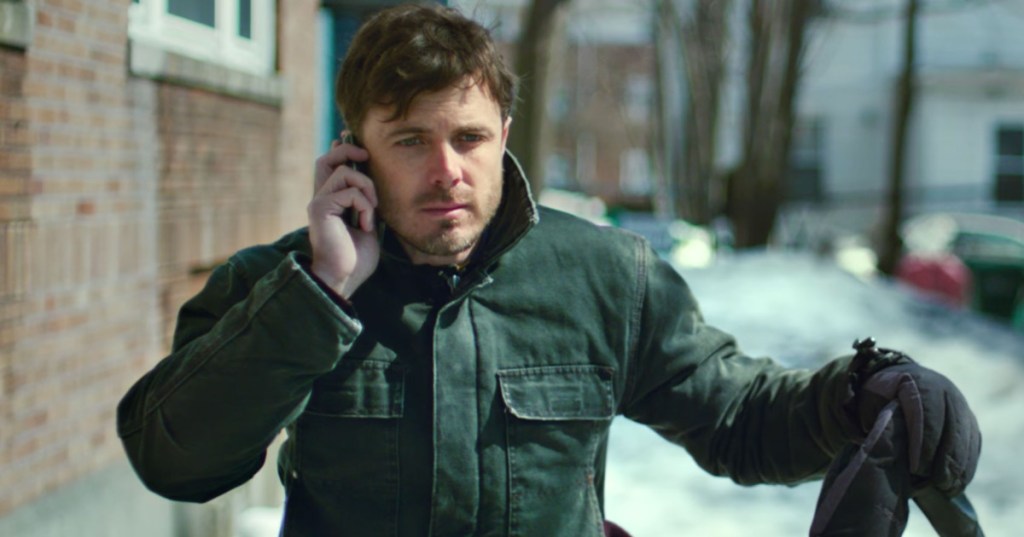
Obviously, this is a cliché, but I believe it cloaks a deeper truth. A lot of these thoughts were recently stirred up by the Oscar-winning movie Manchester by the Sea. I had heard that it was very depressing and “super sad”, but that didn’t prepare me for the experience. For me, it was an utterly devastating human story, and while it left me feeling somewhat sad, it also had the effect of making me feel grateful for the really important things in my life. It was an odd feeling, but the net effect of a movie so centered around death and grief was ultimately one of life affirmation, a call to take inventory of what matters.
I’m not optimistic that I would get very far invoking the wisdom of the Stoics to a three or a five year old as they contemplate why they didn’t get as many Twizzlers as the next guy. I definitely didn’t tell those kids who were crumpled in defeat on the sand post-piñata to go see Manchester by the Sea. But part of the reason for me writing a blog is to fully suss out what I think for my own benefit, both today and, god-willing, for the future me to reflect on when I re-read this years down the road.
Hopefully, I’ll be able to stop kicking and screaming about what I want long enough to realize that, as before, I already have what I need and its all good.

 Not So Grim
Leave a comment